Hankachō
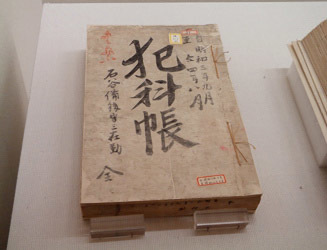
The hankachō (犯科帳) is a compilation of criminal record books by the Nagasaki magistrate’s office. This corpus is ready-made for metadata analysis: including 146 books and 200 years of criminal records from 1666 to 1867, the compilation contains essential biographical data of criminals such as name, age, address and role in crime. This source had at least two important functions for the Nagasaki authorities: 1) as register (台帳), it kept track of criminal record for those who were exiled or released, and of the conditions of living criminals after the penalty was meted, and 2) as a lawbook (判例法), it collated reference material for judicial precedents. Given its length and editorial consistency, historians have appraised the hankachō as holding high value for revealing “truthful reflections of life as is” in Tokugawa Japan, particularly Nagasaki. For the purpose of this project, the hankachō contains biographical data on Japanese gunrunners who trafficked military goods between Korea and Japan around 1667. I compiled a dataset of 94 unique individuals from 10 Japanese towns, and their involvement in 7 smuggling initiatives from years, 1662-1666.
Overview
This section shows my network analysis of gunrunners who trafficked military goods between Korea and Japan around 1667. Using biographical data from the hankachō (犯科帳), a compilation of criminal record books by the Nagasaki magistrate’s office, I compiled a dataset of 94 unique individuals from 10 Japanese towns, and their involvement in 7 smuggling initiatives from years, 1662-1666.
Context
During the early and mid-1600s, Korean appetite for Japanese arms grew to the point of necessitating reconciliation between the two erstwhile enemies. At the time, as the Chosŏn court recovered from the ashes of the war, it sought to capitalize on diplomatic relations with Tsushima and the peace-seeking Tokugawa regime to import high-quality weapons from the archipelago. In order to boost its military, Chosŏn sent embassies to restore relations with Japan and subsequently engage in arms trade. In fact, given the primacy and continuity of royal interest in Japanese military supplies, I argue that arms trade was the prime mover for the Chosŏn court to maintain diplomatic contact with Japan during the early seventeenth century. Further, Korean embassies to Edo and Tsushima served as the court’s proxies for arms trade in Japan.