Project Results
Metadata Analysis
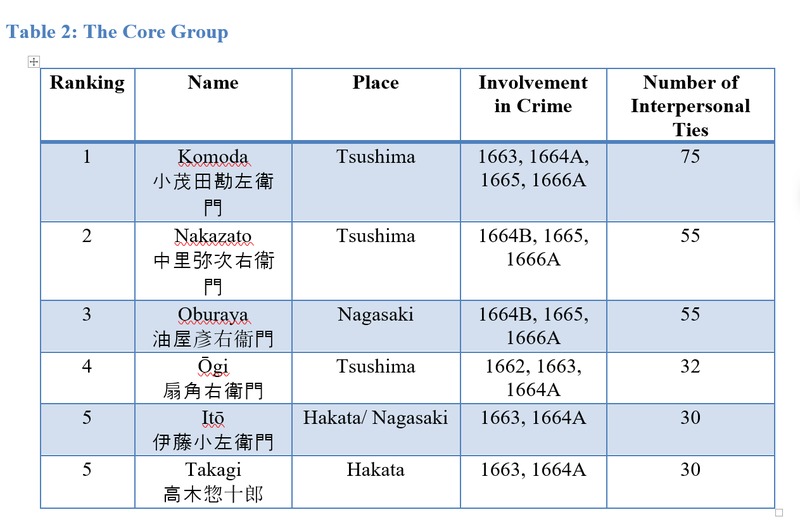
With the metadata analysis using Gephi, we can determine the composition of a core group in the 1667 smuggling network (Table 2). First, there was an influential triumvirate of individuals – Komoda, Nakazato and Oburaya – who occupied structurally central positions in the smuggling network, and thus, constitutes the inner “core.” Second, Komoda stands out as primus inter pares within the triumvirate as well as the epicenter of the entire network. Particularly, in comparison with Itō, he has almost three times as many interpersonal connections, which bespeaks the depth of his logistical involvement in the smuggling operations. Third, individuals belonging to a second tier of connections formed an outer “core,” comprising another trio of individuals – Ōgi, Itō and Takagi. Fourth, at the core of the network, Tsushima-based smugglers were most numerous and powerful. As the data corroborate, Komoda and other Tsushima merchants were structurally central in the sulfur smuggling network: at the least, this suggests that they wielded decisive agency in initiating and brokering the smuggling transactions. Particularly, although historians have recognized Komoda as a leader among many, they did not realize his most central position, one that merits more attention than any other criminal.
Gephi: Network Visualization
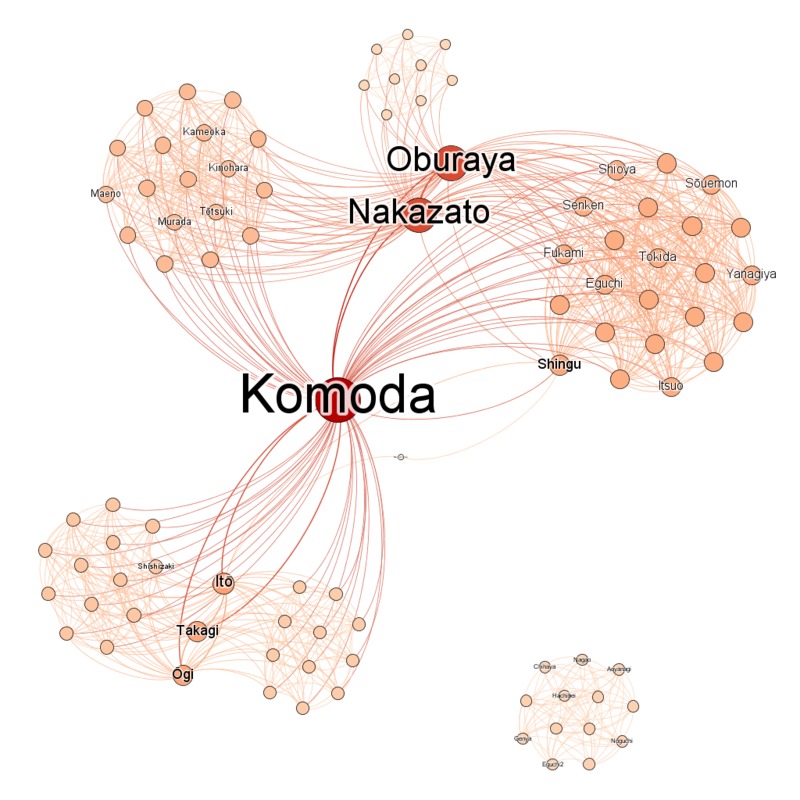
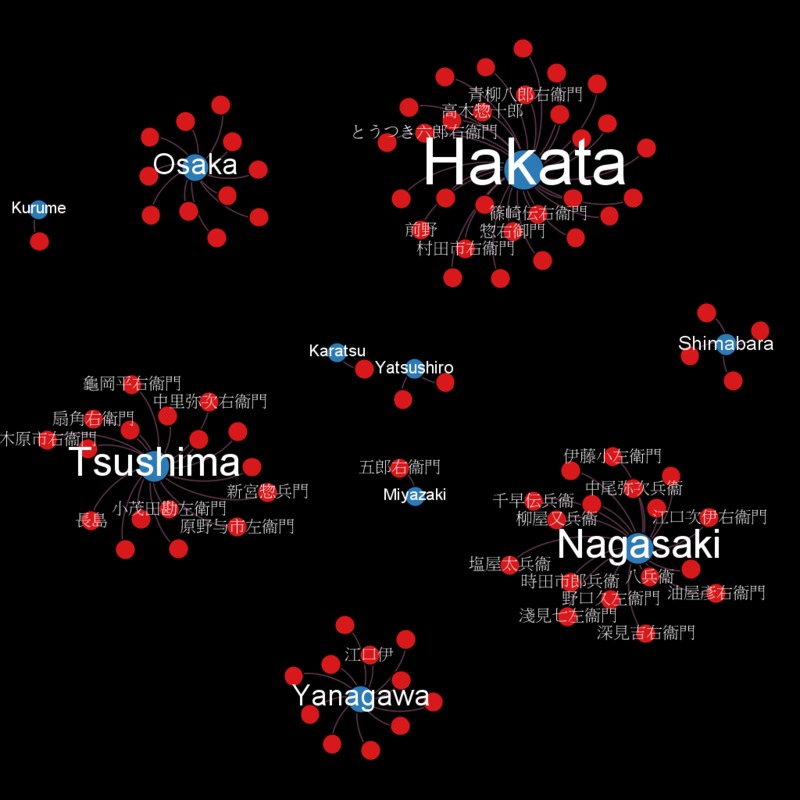
These are visualizations of interpersonal ties between smugglers, based on biographical metadata from the criminal record books. The nodes indicate unique individuals, and the edges signify interpersonal ties between the individuals as defined by their common participation in crime. Both nodes and edges have weighted markers in this graph. The relative degree of interpersonal ties is shown in 1) the color and size of nodes – the redder and larger the node, the more interpersonal connections traversing it, and 2) the thickness of edges - the thicker the edge, the more crimes two individuals shared. Relatively major actors are labeled with their transliterated surnames.
The graphs reveal the relative degree of interpersonal ties in the smuggling network. As shown, the three red nodes – namely Komoda, Nakazato and Oburaya – scored highest in the number of interpersonal connections, respectively, 75, 55 and 55. On the other hand, Itō scored only 30 interpersonal ties, along with Takagai, another smuggler from Hakata.
Visualization using Illustrator
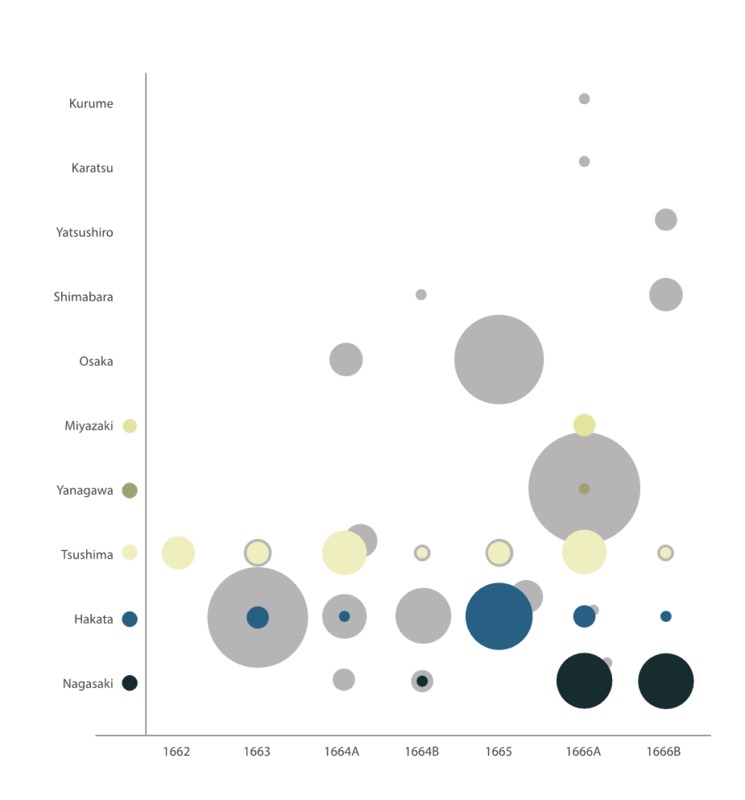
The following graph traces the evolution of smuggling networks over time. Specifically, it studies change in the number of individuals from particular Japanese towns by categorizing individuals according to not only their backgrounds but also whether or not they played major roles. As a result, we lose sight of the “core” group identified in previous graphs, but gain in exchange, another subtler view of the smuggling networks.