Datasets
Garrison Records
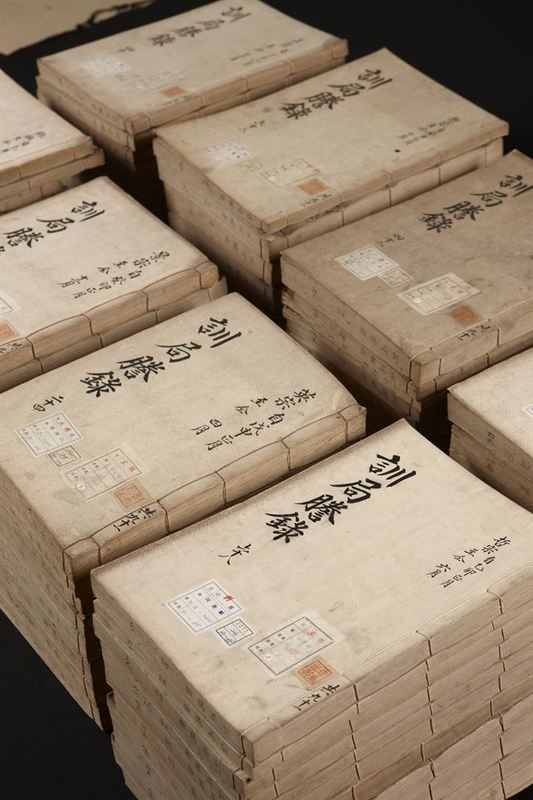
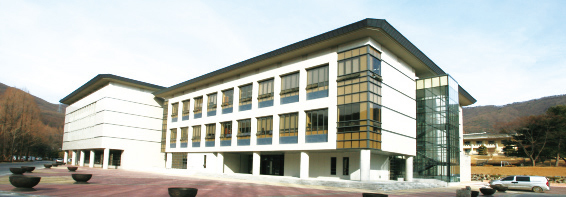
Garrison Records (軍營謄錄) is a collection of daily logs kept by Chosŏn’s central armies for almost three centuries (1615-1882). It amounts to a total of 689 books and is spread across two sites – Jangseogak Archives in Seongnam (569 books) and Kyujanggak Archives in Seoul (120 books). This collection not only contains vital information about the duties and functions of capital armies as institutions aimed at war, including entries about drill, recruitment and weapon procurement. They also include information about social and economic issues related to the military such as abuse of violence by soldiers, monopoly of city markets by military enterprises, and class conflicts between aristocrats and lowborn musketeers.
This vast corpus has been partially transcribed and digitized by the Jangseogak Archives. In my project, I’ve successfully procured from this archive the entire corpus of transcribed texts from the Garrison Records (about 45,000 entries), and began building a relational database with biographical and spatial indices. With the eventual completion of the archive’s digitization projects, my database will expand further to include three centuries of sequential data. The vastness and digital accessibility of the Garrison Records confer on my project a unique potential to query Korea’s premodern past.
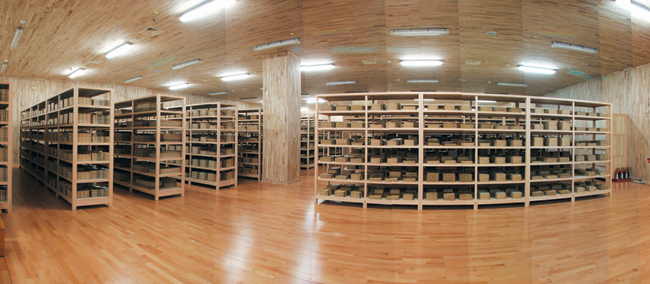
While the corpus is undergoing digitization, working with the original sources is indispensable. My preliminary research confirmed that Garrison Records contains various types of marginalia, including side annotations as well as glued-in “Post-Its” and hidden memos inside the folios. Interpreting these marginalia, which are either undecipherable or misplaced in the digitized versions, are the focus of my prospective research trip to South Korea in 2017.
Hankachō
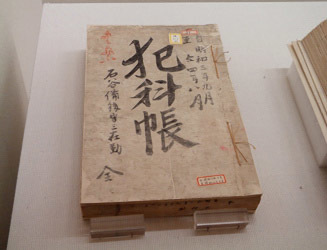
The hankachō (犯科帳) is a compilation of criminal record books by the Nagasaki magistrate’s office. This corpus is ready-made for metadata analysis: including 146 books and 200 years of criminal records from 1666 to 1867, the compilation contains essential biographical data of criminals such as name, age, address and role in crime. This source had at least two important functions for the Nagasaki authorities: 1) as register (台帳), it kept track of criminal record for those who were exiled or released, and of the conditions of living criminals after the penalty was meted, and 2) as a lawbook (判例法), it collated reference material for judicial precedents. Given its length and editorial consistency, historians have appraised the hankachō as holding high value for revealing “truthful reflections of life as is” in Tokugawa Japan, particularly Nagasaki. For the purpose of this project, the hankachō contains biographical data on Japanese gunrunners who trafficked military goods between Korea and Japan around 1667. I compiled a dataset of 94 unique individuals from 10 Japanese towns, and their involvement in 7 smuggling initiatives from years, 1662-1666.